Best Water Filter for Microplastics UK — Plastic-Free Water
If you have read our article on microplastics in UK tap water, you know the situation: tap water contains microplastic particles — far fewer than bottled water, but not zero. The largest published survey, Kosuth et al. in PLOS ONE (2018), tested 159 tap water samples sourced from around the world and found anthropogenic particles in 81% of them, averaging 5.45 particles per litre.
Those are global figures. That study reports no UK-specific percentage and no UK-specific particle count, and no reliable UK-specific tap water count has been published in the peer-reviewed literature since. It is worth saying that plainly, because a lot of UK coverage quotes country-level numbers that do not trace back to a peer-reviewed source.
The logical next question is: can a water filter help?
The answer is yes — but the type of filter matters enormously. A basic jug filter and a reverse osmosis system sit at opposite ends of both effectiveness and cost. This guide breaks down which filtration technologies actually remove microplastics, which certifications to look for, and which specific products are available from UK retailers if you want genuinely plastic-free drinking water.
| Product | Price | Buy |
|---|---|---|
| ZeroWater 2.8L 5-Stage Water Filter Jug ZeroWater | typically £30-45 | Check price on Amazon — ZeroWater 2.8L 5-Stage Water Filter Jug (opens in a new tab) |
| BRITA Marella 2.4L Water Filter Jug BRITA | typically £15-25 | Check price on Amazon — BRITA Marella 2.4L Water Filter Jug (opens in a new tab) |
| LifeStraw Home 7-Cup Water Filter Pitcher LifeStraw | typically £45-60 | Check price on Amazon — LifeStraw Home 7-Cup Water Filter Pitcher (opens in a new tab) |
| LifeStraw Home 7-Cup Glass Pitcher LifeStraw | typically £55-70 | Check price on Amazon — LifeStraw Home 7-Cup Glass Pitcher (opens in a new tab) |
| Waterdrop G3P800 Reverse Osmosis System Waterdrop | typically £650-750 | Check price at Waterdrop UK — Waterdrop G3P800 Reverse Osmosis System (opens in a new tab) |
| TAPP Water EcoPro Tap Water Filter TAPP Water | typically £30-40 | Check price on Amazon — TAPP Water EcoPro Tap Water Filter (opens in a new tab) |
What Types of Microplastics Are in UK Tap Water?
Before choosing a filter, it helps to understand what you are filtering out. The microplastics found in UK tap water come from several sources:
- Synthetic fibres from clothing and textiles that pass through wastewater treatment — these are typically 10-5,000 micrometres in length
- Fragments from degraded larger plastics — variable sizes, often in the 1-100 micrometre range
- Microbeads from personal care products (now banned in UK rinse-off products since 2018, but still present in the water system from historical use)
- Film and sheet fragments from plastic packaging degradation
A study of a large UK wastewater treatment works, published in Environmental Science & Technology (2016), found that treatment removed 98.41% of microplastic particles during processing. However, the volumes involved mean the small fraction that passes through still adds up: the researchers calculated that this single works was releasing around 65 million microplastic particles into the receiving river every day.
The particle sizes matter for filtration. Most microplastics counted in tap water surveys fall in the 1-100 micrometre range — but those surveys could only count what their methods were able to see. Research published in Proceedings of the National Academy of Sciences (2024) applied a far more sensitive imaging method to bottled water and found roughly 240,000 particles per litre, around 90% of them nanoplastics below 1 micrometre. That is a bottled-water result, not a tap-water one, and we are not going to present it as one. Our own inference — labelled as ours, not the study’s — is that tap water surveys are likely to be undercounting the same size range for the same methodological reason. Nobody has yet published the equivalent measurement for tap water.
The filtration challenge: A filter that removes particles above 10 micrometres will catch most visible microplastic fibres, but may miss smaller fragments. A filter that removes particles down to 1 micrometre will catch the vast majority of measured microplastics. Only reverse osmosis can reliably reach into the nanoplastic range.
Filtration Technologies Compared
Activated Carbon (Granular and Block)
Activated carbon is the most common filtration media in consumer water filters. It works by adsorption — contaminants stick to the porous carbon surface as water passes through.
How it removes microplastics: Physical trapping in the carbon matrix, not chemical adsorption. Removal therefore depends on pore size rather than the carbon itself: a 2023 University of Toronto study published in Polymers that tested household pour-through filters found that devices filtering down to 1 micrometre or finer removed 78-100% of microplastic test particles, while loose granular carbon on its own performed poorly.
What it does not remove: Particles smaller than the pore size of the carbon block. Granular activated carbon (loose granules, as used in basic jug filters) has larger gaps between granules and is less effective than compressed carbon block filters, which have a tighter, more uniform pore structure.
Carbon block vs. granular carbon:
| Feature | Granular Carbon (jug filters) | Carbon Block (tap/under-sink) |
|---|---|---|
| Typical pore size | 20-50 micrometres | 0.5-10 micrometres |
| Microplastic removal | Partial (larger particles only) | Good (most measured microplastics) |
| Flow rate | High | Moderate |
| Cost | Low | Moderate |
| Installation | None | Minimal (attaches to tap) |
Reverse Osmosis (RO)
Reverse osmosis forces water through a semi-permeable membrane with pores as small as 0.0001 micrometres (0.1 nanometres). This is fine enough to remove individual dissolved molecules, let alone microplastic particles.
How it removes microplastics: Physical barrier. The membrane pores are vastly smaller than any microplastic or nanoplastic particle.
Effectiveness: The case for RO is a pore-size argument, and it is a strong one — at 0.0001 micrometres the membrane openings are orders of magnitude smaller than the smallest nanoplastic anyone has measured, so particles cannot pass through the membrane itself. We are not aware of a published full-scale study measuring microplastic removal by a domestic RO unit specifically, so we make the case on physics rather than on a field result we do not have.
For a sense of scale from municipal treatment, an Australian study published in Water Research (2017) found an average of 0.28 microplastic particles per litre remaining in tertiary-treated effluent, against 0.48 in secondary and 1.54 in primary. No reverse osmosis stage was involved, and effluent is not drinking water — but it illustrates the general shape of the thing: each additional filtration stage cuts particle counts sharply, and none of them reaches zero. That is also the honest expectation for a home RO system. Near-complete, not absolute, because housings and seals wear.
Trade-offs:
- Water waste: RO systems typically produce 1 litre of filtered water for every 3-4 litres of input water. Some modern systems have improved this ratio to 1:1 or 2:1, but waste remains a consideration.
- Mineral removal: RO removes beneficial minerals (calcium, magnesium) alongside contaminants. Some systems include a remineralisation stage to add these back.
- Cost: The most expensive home filtration route by a wide margin — an under-sink RO system costs several times a ceramic under-sink filter to install, with the highest annual membrane and filter replacement bill of any technology here on top.
- Installation: Requires under-sink plumbing modification, typically with a dedicated tap.
Ceramic Filters
Ceramic filters use a porous ceramic element with pore sizes typically between 0.2 and 1 micrometre. Water passes through the ceramic material, which physically blocks particles larger than the pore size.
How it removes microplastics: Physical barrier, similar in principle to RO but with larger pore sizes.
Effectiveness: A ceramic filter with 0.2-micrometre pores will catch the vast majority of microplastics that have been measured in tap water studies. It will not catch nanoplastics.
Advantages over RO: No water waste, no electricity required, no mineral removal. Ceramic elements can often be cleaned and reused rather than replaced.
UK availability: Less common than carbon or RO systems. Doulton and British Berkefeld are UK-based ceramic filter manufacturers with products available from specialist retailers.
UV Purification
Ultraviolet light treatment kills bacteria and viruses but does not remove microplastic particles. UV is irrelevant for microplastic filtration. If you see a filter system that includes UV, it is addressing microbial safety, not particle removal.
Filter Certifications: What to Look For
Water filter certifications can be confusing. Here is what the main standards mean for microplastic removal:
NSF/ANSI 53: Cyst Reduction
This is the most relevant standard for microplastic removal. NSF 53 certification for cyst reduction means a filter has been independently tested and verified to remove particles down to 1 micrometre — the size of Cryptosporidium and Giardia cysts. A filter certified to NSF 53 for cyst reduction will, by definition, also remove the vast majority of microplastic particles that have been measured in tap water studies.
Look for this certification. It is the closest existing standard to a “microplastic removal” certification.
NSF/ANSI 42: Aesthetic Effects
Tests for taste, odour, and chlorine reduction. Does not test for particle removal. A filter with only NSF 42 certification may or may not remove microplastics — the standard simply does not measure this.
NSF/ANSI 401: Emerging Compounds
Tests for certain pharmaceutical compounds, pesticides and herbicides — and, since the standard was extended, for microplastics as a named claim, requiring at least 85% removal of particles in the 0.5-1 micrometre range. That makes NSF/ANSI 401 the closest thing to a microplastics certification that currently exists, and the reason it is worth looking for by name.
Very few consumer filters hold it. Doulton certifies its ceramic elements against NSF/ANSI 401 and publishes a 99.9% microplastic reduction figure for the Ultra Sterasyl candle on that basis. None of the major supermarket jug brands hold it for their cartridges, and a filter that mentions NSF 401 in marketing copy without naming the claim it holds is worth checking rather than trusting.
NSF P473: PFAS Reduction
Tests for PFAS (per- and polyfluoroalkyl substances) removal. Not directly related to microplastics, but indicates a high-quality carbon block filter that is likely effective against particles in the low-micrometre range.
Summary: For microplastic removal, prioritise NSF 53 (cyst reduction) certification. If the filter also holds NSF 401 and/or NSF P473, even better.
How We Chose These Filters
We do not run a water testing laboratory, and unlike our product database categories, filter effectiveness cannot be judged from an ingredient list alone. So our approach for this guide, consistent with our methodology, is:
-
Match stated specifications to measured particle sizes — we compare each filter’s rated pore size and filtration technology (from manufacturer specification sheets) against the particle sizes actually measured in UK tap water studies. A 0.2-micrometre membrane catching 1-100-micrometre particles is physics, not marketing.
-
Weight independent certifications over claims — NSF/ANSI certifications are independently tested; “removes 99% of contaminants” on a box is not. Where a filter holds no relevant certification, we say so.
-
Check published filtration research — peer-reviewed studies on carbon, ceramic, and RO membrane effectiveness (cited throughout and in the sources below) anchor what each technology class can and cannot do.
-
UK price band, availability, and running costs — we rank each filter against the others rather than quoting figures that go stale, and we flag where replacement cartridges dominate the total, because a cheap jug with expensive cartridges is not cheap.
-
Rate the filter’s own housing separately — every filter here also gets an entry in our water filter product database, where the badge tracks the material your drinking water actually sits against. Most filter jugs remove microplastics through a plastic body, which is a genuine tension rather than a technicality, and we say so on each entry.
What we do not do: hands-on lab testing of individual filters. Where a manufacturer publishes no pore-size rating at all — as ZeroWater and BRITA do not — we say that rather than filling the gap with a retailer’s number.
The Filters at a Glance
| Filter | Type | Technology | Rated pore size | Microplastic removal | Housing | Price band | Best for |
|---|---|---|---|---|---|---|---|
| LifeStraw Home | Jug | Membrane microfilter + carbon | 0.2 µm | Excellent (most measured microplastics) | Plastic | Mid | Best jug option |
| ZeroWater 2.8L | Jug | 5-stage, ion exchange + carbon | None published | Unstated by ZeroWater | Plastic | Budget | Jug with TDS meter |
| BRITA Marella | Jug | Granular activated carbon | None published | Partial (larger particles) | Plastic | Budget | Taste on a budget |
| Aqua Optima Liscia | Jug | Granular activated carbon | None published | Partial (larger particles) | Plastic | Budget (lowest here) | Cheapest entry point |
| TAPP Water EcoPro | Tap-mounted | Compressed carbon block | 1–2 µm | Good | Plastic | Mid | Upgrade without plumbing |
| Doulton HIS | Under-sink | Ceramic candle + carbon | 0.9 µm absolute | Excellent | Stainless steel | Premium | Best overall balance |
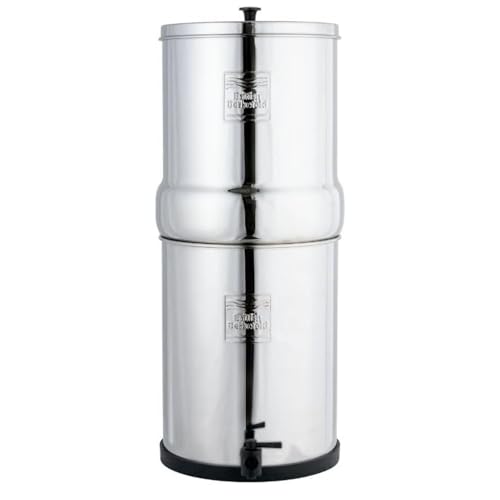
| British Berkefeld | Gravity | Ceramic candle + carbon | 0.9 µm absolute | Excellent | Stainless steel | Premium | Best with no plumbing |
| Waterdrop G3P800 | Under-sink | Reverse osmosis, multi-stage | 0.0001 µm | Most thorough (incl. nanoplastics) | Plastic | Premium (highest here) | Maximum filtration |
Price bands are relative to the other filters on this page, not absolute — we rank rather than quote figures, because quoted figures go stale. Check the current price on the retailer listing before buying. The “Housing” column is the material your drinking water sits against, which is what drives the badge on each product’s own page — see how we rate contact surfaces.
One tension worth naming up front
Almost every filter on this page removes microplastics from your tap water through a housing that is itself made of plastic. That is not a gotcha, and it is not a reason to skip filtering — but it is the reason most of these products carry a Concern identified badge in our database despite removing microplastics being their entire purpose. Our rating tracks the material your drinking water sits against, and on a jug that is the jug. If that trade-off bothers you, the two stainless steel systems below are the ones where it does not arise.
Best Water Filter Jugs for Microplastics UK
Filter jugs are the most accessible option for UK consumers — no installation, low cost, and available from any supermarket or Amazon.
1. ZeroWater 2.8L 5-Stage Filter Jug
ZeroWater uses a 5-stage filtration system that includes ion exchange, activated carbon, and a fine mesh layer, and the jug ships with a TDS (total dissolved solids) meter so you can watch the reading fall to zero. It is the most satisfying filter on this page to actually use.
Price: mid-range for a jug — above Brita and Aqua Optima, below the LifeStraw. Replacement filters are the main ongoing cost, at roughly double a Brita cartridge. UK availability: ZeroWater 2.8L jug on Amazon UK — ZeroWater 2.8L 5-Stage Water Filter Jug (opens in a new tab) typically £30-45 , Argos, Robert Dyas. Note that ZeroWater’s own UK shop has closed and now points buyers to other retailers, so check stock before setting your heart on it. Microplastic relevance: Weaker than its reputation suggests. ZeroWater publishes no pore-size rating for this cartridge anywhere we could find, and makes no microplastic removal claim at all — the widely repeated “0.5 micron” figure traces back to retailer copy, not to ZeroWater. Its certification is from IAPMO, for PFOA/PFOS, lead, chlorine, chromium and mercury. Excellent at what it is certified for; unevidenced for microplastics. Our database entry: ZeroWater 2.8L 5-Stage Water Filter Jug — rated Concern identified, because ZeroWater states its devices are made of BPA-free polypropylene and ABS.
2. BRITA Marella 2.4L (Maxtra Pro) Filter Jug
The most widely sold filter jug brand in the UK, and the Marella is its most widely sold jug. Maxtra Pro cartridges use a combination of coconut-shell activated carbon granules and ion-exchange resin behind a fine mesh.
Price: near the bottom of the range — only the Aqua Optima jug is cheaper. Replacement cartridges are among the cheapest here, and cheaper still in multipacks. UK availability: Virtually everywhere — supermarkets, BRITA Marella 2.4L on Amazon UK — BRITA Marella 2.4L Water Filter Jug (opens in a new tab) typically £15-25 , Argos, John Lewis, B&Q. Microplastic relevance: Brita filters use granular activated carbon, not compressed carbon block. The pore structure is less uniform and less fine than carbon block systems. Based on the research cited above, they will remove some larger microplastic particles but are less effective against particles below 10 micrometres. BRITA publishes no pore-size rating for the cartridge and makes no microplastic removal claim anywhere on its UK site. Our database entry: BRITA Marella 2.4L Water Filter Jug — rated Concern identified. BRITA describes the jug as ISCC PLUS certified bio-based plastic, which tells you where the feedstock came from rather than what the polymer is.
3. Aqua Optima Liscia Filter Jug
A UK-based brand offering jug filters at a lower price point than Brita. Uses Evolve+ filter cartridges with activated carbon and ion-exchange resin. Aqua Optima filters are advertised as compatible with Brita-style jugs.
Price: the cheapest entry point on this page, for the jug and for replacement cartridges alike — undercutting even Brita. UK availability: Amazon UK, Argos, Asda. This is the one filter on this page we have not added to our product database: Aqua Optima’s own website was unreachable when we checked, so we could not confirm the jug’s materials in the manufacturer’s own words, and we do not list a product on a retailer’s paraphrase alone. Microplastic relevance: Similar technology to Brita — granular activated carbon. Comparable particle removal capabilities, meaning effective against larger microplastics but limited against the smallest particles.
4. LifeStraw Home Filter Jug
LifeStraw Home uses a two-stage filtration process: a membrane microfilter (rated to 0.2 micrometres) combined with activated carbon plus ion exchange. The membrane stage is designed for bacteria and parasite removal, but also functions as an effective microplastic barrier.
Price: the most expensive jug here — above ZeroWater, and well above Brita and Aqua Optima. Replacement filters are the real cost, at roughly three to four times a Brita cartridge. UK availability: LifeStraw Home 7-Cup on Amazon UK — LifeStraw Home 7-Cup Water Filter Pitcher (opens in a new tab) typically £45-60 , specialist outdoor retailers. Microplastic relevance: The 0.2-micrometre membrane is the finest pore size available in a jug filter format, and LifeStraw is one of the few manufacturers here to put a number on it: 99.999% of microplastics, with the glass version described as WQA certified for that claim. This is our top recommendation for a jug-format filter if microplastic removal is your primary concern.
Pros: The finest filtration available without plumbing; membrane works by physical exclusion rather than adsorption; no installation whatsoever. Cons: Replacement filters cost roughly three to four times a Brita cartridge; jug format means filtering in batches rather than on demand; less widely stocked on the UK high street than Brita.
Our database entries: LifeStraw Home 7-Cup Water Filter Pitcher and the 7-Cup Glass Pitcher (on Amazon UK). Both are rated Concern identified, and the glass one is worth explaining: the carafe genuinely is hand-blown borosilicate glass, but unfiltered water stands in a plastic reservoir above it for the whole filtration cycle and drains through plastic filter housings. The glass is the last thing the water touches, not the only thing. It is still the nicer object, and if you want the LifeStraw filtration in something you are happy to leave on the table, it is the one to buy.
Our recommendation: For microplastic removal specifically, the LifeStraw Home is the best jug filter option due to its 0.2-micrometre membrane. If you want a cheap jug for taste, Brita and Aqua Optima do that job — just do not buy either expecting microplastic removal, because neither claims it.

typically £45-60
Best Under-Sink Filters for Microplastics UK
Under-sink filters provide better filtration than jugs because they use pressurised water flow through denser filter media. They require basic plumbing installation (usually connecting to the cold water pipe under the kitchen sink) and deliver filtered water through a dedicated tap or your existing tap via a diverter valve.
1. Doulton HIS Push-Fit (Under-Sink Ceramic Filter)
Doulton is a British manufacturer, based in Staffordshire, with over 180 years of ceramic water filtration behind it. The HIS push-fit system pairs a Biotect Ultra ceramic candle — a ceramic microfilter shell around an activated carbon core — with something no other filter on this page has: a housing that is not plastic. Doulton’s own specification calls it a “sleek stainless steel sump”, and lists the housing material as stainless steel.
That combination makes it the only filter here that passes our material test as well as the filtration one. Water sits against steel and ceramic; the plastic supply tubing and push-fit connectors in the installation kit are transit, not storage, in the same way a stainless steel bottle’s polypropylene lid does not change its rating.
Price: a clear step up from any jug, but a fraction of the RO system. Replacement ceramic candles last around 6 months, which keeps the annual cost below most jug cartridge habits. UK availability: Doulton HIS on Amazon UK, or direct from Doulton. Microplastic relevance: Doulton’s own filter performance data puts its ceramics at 0.9 micrometres absolute (>99.99% particulate efficiency) and 0.5-0.8 micrometres nominal — finer than any jug on this page other than the LifeStraw membrane, and comfortably below the size of most microplastics measured in tap water. Doulton lists microplastics among the contaminants the system reduces, and certifies its ceramic elements against NSF/ANSI 401, the standard that carries the microplastics claim.
Pros: Stainless steel housing and a ceramic element, so the water never rests against plastic; 0.9-micrometre absolute rating with no water waste; ceramic candles can be cleaned and reused rather than binned; British manufacturer with a long ceramic filtration track record. Cons: Requires basic under-sink plumbing installation; will not catch nanoplastics; flow rate is slower than an unfiltered tap; more expensive than any jug here. Our database entry: Doulton HIS Push-Fit Under-Sink Filter — one of only two filters on this page rated Low concern.
2. British Berkefeld Stainless Steel Gravity System
If you rent, or simply do not want to touch the plumbing, this is the same answer without the plumbing. Two stainless steel chambers stack on the worktop; water drips from the upper chamber through Ultra Sterasyl ceramic candles into the lower one, driven by nothing but gravity. No power, no plumbing, no water waste. British Berkefeld is part of the same Staffordshire operation as Doulton, and uses the same ceramic technology.
Price: between the Doulton under-sink system and the jugs — more than any jug here, less than the plumbed options. Replacement elements last around 6 months. UK availability: British Berkefeld 8.5L on Amazon UK, or direct from Doulton, which also sells 1L, 6L and 12L versions. Microplastic relevance: The same 0.9-micrometre absolute ceramic as the Doulton system. Doulton claims a 99.9% reduction of microplastics for the Ultra Sterasyl element, citing NSF/ANSI Standard 401 — the most specific microplastic figure any manufacturer on this page publishes. Their broader system claims are footnoted as “based upon micro test dust filtration testing”, which is worth knowing: it is a particle-size test, not a test with plastic particles.
Pros: Stainless steel chambers and ceramic elements, so no plastic in the drinking water path; zero installation; works in a power cut; holds a large volume of filtered water ready to pour. Cons: Takes up real worktop space; slow — gravity filtration is measured in litres per hour, not per minute; the wing nut that holds each candle is plastic (Doulton’s own description), and the standard tap’s material is not stated, though a stainless steel tap is sold separately. Our database entry: British Berkefeld Stainless Gravity Filter 8.5L — rated Low concern.
3. Waterdrop G3P800 Reverse Osmosis System
A tankless reverse osmosis system that connects under the sink and delivers filtered water through a dedicated tap. The G3P800 uses a multi-stage process: sediment filter, carbon block, RO membrane, and post-carbon polishing. The manufacturer claims a 3:1 pure-to-drain water ratio (better than older RO systems).
Price: the most expensive option here by a wide margin — several times the Doulton — with the highest annual replacement-filter cost on this page too. UK availability: direct from Waterdrop UK. We could not confirm a current Amazon UK listing for this exact model, so we are not linking one. Microplastic relevance: RO membrane removes particles down to 0.0001 micrometres — the most thorough microplastic and nanoplastic removal available. If you want the absolute maximum filtration, this is it. Worth noting that Waterdrop itself makes no microplastic claim for the system; the case rests on the membrane’s pore size, as it does for RO generally.
Pros: The only technology class that reliably removes nanoplastics as well as microplastics; tankless design saves cupboard space; claimed 3:1 pure-to-drain ratio is better than older RO systems. Cons: By far the most expensive option upfront and to run; still wastes water with every litre filtered; strips beneficial minerals (calcium, magnesium) unless you add a remineralisation stage; requires plumbed installation with a dedicated tap. Our database entry: Waterdrop G3P800 Reverse Osmosis System — rated Concern identified. The only wetted materials Waterdrop publishes are its PE tubing runs; the housing polymer is not disclosed.
4. TAPP Water EcoPro (Tap-Mounted Carbon Block)
TAPP Water produces a compact filter that attaches directly to your kitchen tap, using a compressed activated carbon block with a rated pore size of 1-2 micrometres. It is a simpler alternative to under-sink systems, requiring no plumbing modification.
Price: above every jug here, below the Doulton under-sink system. Replacement cartridges are an annual cost rather than a monthly one. UK availability: TAPP Water EcoPro on Amazon UK — TAPP Water EcoPro Tap Water Filter (opens in a new tab) typically £30-40 , direct from TAPP Water. Microplastic relevance: The 1-2-micrometre carbon block will catch the majority of measured microplastics — TAPP states it “removes all particles larger than 1-2 microns, including microplastics”. Not as thorough as ceramic or RO, but significantly more effective than granular carbon jug filters. A good middle ground between cost and effectiveness. One clarification worth making: TAPP’s carbon block is described as breaking down harmlessly, but the housing and the cartridge shell are both ABS plastic, and it holds no product-level NSF certification — only component-level NSF/ANSI 61 compliance for the carbon block. Our database entry: TAPP Water EcoPro Tap Water Filter — rated Concern identified.
Our recommendation: For serious microplastic reduction, the Doulton HIS offers the best balance of effectiveness (0.9-micrometre absolute ceramic), longevity, cost and minimal waste — and it is the only plumbed filter here with a stainless steel body rather than a plastic one. It is also made in the UK. If you cannot install anything, the British Berkefeld gravity system gets you the same ceramic and the same steel water path with no tools at all. For maximum possible filtration including nanoplastics, the Waterdrop G3P800 RO system is the most thorough option.
Do Brita Filters Remove Microplastics?
This question deserves its own section because Brita is by far the most commonly used water filter brand in the UK, and many consumers assume their Brita jug is handling microplastics.
The short answer: Partially, at best. Brita Maxtra filters use granular activated carbon, which can physically trap larger microplastic particles — those above approximately 10 micrometres. However, a 2023 University of Toronto study published in Polymers that tested pour-through jug devices found that a jug relying on granular carbon and ion-exchange resin alone provided no reliable microplastic removal — only jug devices with a fine membrane performed well.
What Brita does not do:
- Brita does not certify or claim microplastic removal
- Brita filters do not have NSF 53 (cyst reduction) certification, which would indicate reliable removal of particles down to 1 micrometre
- The granular carbon format has larger, less uniform gaps than compressed carbon block, meaning smaller particles can pass through
- Brita filters are primarily designed for taste improvement (chlorine, lime scale) rather than particle filtration
The nuance: A Brita filter is better than no filter at all for microplastics — it provides some reduction in larger particles. But if microplastic removal is your specific goal, a filter with a finer pore rating (ZeroWater, LifeStraw, or an under-sink system) will be more effective.
An important context note: As we discuss in our bottled water vs tap water comparison, UK tap water — even unfiltered — contains far fewer microplastics than bottled water. The research consistently shows bottled water contains around 325 microplastic particles per litre (or 240,000 nanoplastics per litre with advanced detection), against a mean of 5.45 particles per litre across 159 tap water samples sourced worldwide. Using any filter on tap water, even a basic Brita, puts you well ahead of drinking bottled water.
How to Choose: A Decision Framework
Choosing the right water filter depends on your priorities. Here is a simple decision framework:
Cheapest useful option — occasional use: A Brita or Aqua Optima jug provides basic filtration and taste improvement, with some microplastic reduction for larger particles.
Best jug for microplastics specifically: The LifeStraw Home jug with its 0.2-micrometre membrane provides the finest filtration available in a jug format.
Best value under-sink: The Doulton HIS ceramic filter or a TAPP Water tap-mounted filter provides superior filtration without the water waste of reverse osmosis.
Maximum filtration, whatever it costs: A reverse osmosis system like the Waterdrop G3P800 provides the most thorough removal of microplastics, nanoplastics, and dissolved contaminants.
Other Factors to Consider
- Water waste: RO systems waste water (3-4 litres per 1 litre filtered for older models, 1-3 litres for newer models). No other filter type wastes water.
- Mineral removal: Only RO removes beneficial minerals. If you use RO, consider a system with a remineralisation stage.
- Filter replacement frequency: Jug filters need replacing every 1-2 months. Under-sink systems typically last 6-12 months per filter.
- Installation: Jugs need no installation. Tap-mounted filters attach in minutes. Under-sink systems need basic plumbing work.
- Running costs: Counter-intuitively, an under-sink system usually costs less per year in replacement media than a jug does in cartridges. A jug is cheap to buy and expensive to keep running; an under-sink filter is the reverse.
Who Each Option Is (and Isn’t) For
- Renters, or anyone who cannot touch the plumbing: a jug (LifeStraw Home for microplastics, Brita or Aqua Optima for taste-only) or the tap-mounted TAPP EcoPro. Under-sink systems are off the table, and that is fine — a 0.2-micrometre jug membrane covers the vast majority of measured microplastics. If you have the worktop space, the British Berkefeld gravity system needs no installation either, and is the only no-plumbing option here that is not plastic-bodied.
- Anyone who wants the filter itself to be plastic-free: there are exactly two on this page — the Doulton HIS under-sink system and the British Berkefeld gravity system, both stainless steel with ceramic elements. Every other filter here removes microplastics through a plastic housing. Whether that matters is a judgement call, not a safety verdict, and we have badged each product so you can make it yourself.
- Households that drink a lot of tap water: an under-sink system. Refilling a jug six times a day is exactly the kind of friction that makes people give up. The Doulton HIS delivers filtered water on demand for less per year than most jug cartridge subscriptions, and is the only plumbed filter here whose body is stainless steel rather than plastic.
- Maximum-caution buyers (or those worried about nanoplastics): reverse osmosis is the only technology that reaches the nanoplastic range. But be honest with yourself about the trade-offs — water waste, mineral removal, and an upfront cost several times any other filter on this page. For most people this is more filtration than the measured contamination justifies.
- Anyone currently drinking bottled water: stop optimising and start anywhere. Tap water surveys average around 5.45 microplastic particles per litre against roughly 325 (or 240,000 nanoplastics with newer detection methods) in bottled water — even an unfiltered switch to tap is a large reduction, and any filter widens the gap.
- Who should skip filtering altogether: if the budget only stretches to one change, a stainless steel or glass drinking bottle arguably beats a basic jug — the container you drink from all day matters, and granular carbon jugs only partially address particles anyway.
Frequently Asked Questions
Do Brita filters remove microplastics?
Partially — granular activated carbon can trap larger particles (above roughly 10 micrometres), but Brita does not claim or certify microplastic removal, and smaller particles can pass through. The full breakdown is in the dedicated Brita section above.
What type of water filter removes the most microplastics?
Reverse osmosis. RO membranes filter down to 0.0001 micrometres — orders of magnitude smaller than any plastic particle yet measured — so the case rests on pore size rather than on any single field study. For a more affordable option, carbon block or ceramic filters rated at 0.5 micrometres or finer catch the vast majority of measured microplastics without RO’s water waste.
Should I choose a jug, under-sink, or reverse osmosis filter?
For most UK households: start with a sub-micron jug (LifeStraw Home — the priciest jug here, but the finest filtration in the format) if you want zero installation; move to an under-sink ceramic filter (Doulton HIS — a step up to buy, but cheaper to run, and not plastic-bodied) if your household drinks enough tap water to make on-demand filtering worthwhile; choose RO (the most expensive option here by a wide margin) only if you specifically want nanoplastic removal and accept the water waste and mineral stripping.
Is UK tap water safe to drink without a filter?
UK tap water meets all Drinking Water Inspectorate standards and is among the safest in the world. Microplastics are not currently part of mandatory UK water testing, and there is no well-established UK-specific count in the peer-reviewed literature — the largest published survey found anthropogenic particles in 81% of 159 tap water samples sourced worldwide, averaging 5.45 particles per litre — far below bottled water, but not zero. A filter is an additional layer of protection, not a necessity for basic safety. See our full article on microplastics in UK tap water.
Does boiling water remove microplastics?
Boiling alone does not destroy plastic particles, but research published in Environmental Science & Technology Letters (2024) found that boiling tap water and then pouring it through a simple filter can remove up to 90% of nano and microplastics. The effect is strongest in hard water areas (much of southern and eastern England), where boiling causes dissolved minerals to form limescale that traps the particles, which the filter then catches. A zero-cost interim step while you decide on a filter.
Complementary Steps: Beyond Filtration
A water filter addresses microplastics in your water supply, but the container you drink from matters too. If you filter your water and then store or drink it from a plastic bottle, you are reintroducing microplastic exposure from the container itself.
For the best results, pair your water filter with a non-plastic drinking vessel:
- Stainless steel water bottles like the Klean Kanteen Classic 800ml (on Amazon UK) or Chilly’s Series 2 (on Amazon UK) are durable options for taking filtered water on the go
- Glass bottles like the Lifefactory Glass Bottle 650ml (on Amazon UK) provide a completely inert drinking surface
- At home, glass or ceramic cups and jugs keep your filtered water microplastic-free from tap to mouth
See our complete guide to microplastic-free water bottles for detailed reviews of UK-available options.
Drinking water is also only one of the routes by which microplastics reach your diet — food packaging, cookware, and preparation surfaces all contribute. Our guide to microplastics in food covers the full picture.
The Bottom Line
UK tap water is safer than bottled water when it comes to microplastics — but a filter can reduce your exposure further. The key is choosing the right filter technology for your budget and needs:
- For most UK households, a filter jug with sub-micron rating (LifeStraw Home or ZeroWater) provides meaningful microplastic reduction at an accessible price point
- For those willing to invest in a permanent solution, a Doulton ceramic under-sink filter provides excellent particle removal with minimal waste and UK-manufactured quality
- For maximum possible filtration, a reverse osmosis system removes microplastics, nanoplastics, and dissolved contaminants — but at a higher cost and with water waste
- At minimum, even a basic Brita filter combined with drinking from a stainless steel or glass vessel puts you well ahead of the microplastic exposure from bottled water
The most important step is the first one: filtering your tap water through any system and drinking it from a non-plastic container. You can always upgrade your filtration later.
Sources
- Anthropogenic contamination of tap water, beer, and sea salt — Kosuth et al., PLOS ONE, 2018 (159 globally sourced tap water samples; global figures, not UK-specific)
- Wastewater Treatment Works (WwTW) as a Source of Microplastics in the Aquatic Environment — Murphy et al., Environmental Science & Technology, 2016 (UK treatment works removal rates)
- Rapid single-particle chemical imaging of nanoplastics — Proceedings of the National Academy of Sciences, 2024 (nanoplastic detection in water)
- Microplastic Removal from Drinking Water Using Point-of-Use Devices — Cherian et al., Polymers, 2023 (household filter effectiveness)
- Wastewater treatment plants as a pathway for microplastics: Development of a new approach to sample wastewater-based microplastics — Ziajahromi et al., Water Research, 2017 (microplastics remaining in primary, secondary and tertiary treated effluent)
- Synthetic polymer contamination in bottled water — Frontiers in Chemistry, 2018 (bottled water comparison data)
- Microplastics in drinking-water — World Health Organization, 2019
- Drinking Boiled Tap Water Reduces Human Intake of Nanoplastics and Microplastics — Yu et al., Environmental Science & Technology Letters, 2024 (boiling and straining in hard water)
Product recommendations are based on publicly available specifications and certifications at the time of writing. Filter performance can vary based on water pressure, temperature, and maintenance. Always check current manufacturer specifications and certifications before purchasing.
Recommended Products

Doulton HIS Push-Fit Under-Sink Filter
Doulton
typically £270-300
British Berkefeld Stainless Gravity Filter 8.5L
British Berkefeld
typically £160-190
LifeStraw Home 7-Cup Water Filter Pitcher
LifeStraw
typically £45-60

TAPP Water EcoPro Tap Water Filter
TAPP Water
typically £30-40