Water Bottle Materials Ranked for Microplastics
If you have searched for a “safe” water bottle, you have probably hit a wall of conflicting labels: BPA-free, food-grade, Tritan, “eco” aluminium, medical-grade steel. The marketing rarely tells you the one thing that actually determines microplastic exposure — what the drinking vessel is made of, and whether that material sheds plastic particles into your water.
This guide ranks the six materials you will actually encounter, from lowest microplastic risk to highest, based on published research rather than packaging claims. The logic is simple: a material either contains polymers that can degrade into particles, or it does not.
The Ranking at a Glance
| Rank | Material | Does the vessel shed microplastics? | Key evidence | Verdict |
|---|---|---|---|---|
| 1 | Borosilicate glass | No — inert, no polymers | No plastic to degrade; gold standard for chemical inertness | Lowest risk |
| 1 | Stainless steel (18/8, 304) | No — inert alloy, no polymers | Metal alloy won’t shed plastic; only lid/seal is plastic | Lowest risk |
| 3 | Aluminium (lined) | Only from the interior liner | Modern co-polyester liners release no BPA; older epoxy liners did | Low, with caveats |
| 4 | Tritan / copolyester | Yes — it is a plastic | Contested estrogenic-activity data; limited long-term shedding data | Moderate |
| 5 | Polypropylene (PP) | Yes — documented under heat | Up to 16.2 million particles/L from PP when heated (Nature Food, 2020) | Higher |
| 6 | ”BPA-free” plastic (general) | Yes — the label is about chemistry, not particles | BPA-free says nothing about physical shedding | Higher |
The two clear winners are glass and stainless steel, because neither the glass nor the steel body contains any polymer that can break down into particles. Everything below them is a plastic (or has a plastic component), and the ranking between them is about how much, how readily, and under what conditions they shed.
A note on scope: almost every bottle on the market — even glass and steel ones — has a plastic or silicone lid and seal, so no bottle is completely plastic-free at the point of contact. This ranking is about the drinking vessel, which is where the large majority of the plastic surface area is. We cover the lid question in detail in our companion guide, do reusable water bottles have microplastics?
1. Borosilicate Glass — Lowest Risk
Glass is chemically inert. It contains no polymers, so the body of a glass bottle won’t shed microplastics — there is no polymer to degrade. This is the same reason laboratories store samples in borosilicate glassware: it does not leach into or react with its contents.
Borosilicate glass (the type used in most quality glass bottles and in cookware like Pyrex) resists thermal shock better than ordinary soda-lime glass, so it copes with hot drinks without cracking. It also imparts no taste whatsoever, which is why people who are fussy about water flavour tend to end up here.
The trade-offs are practical, not chemical. Glass is heavier and can shatter — even with a silicone sleeve, it is the wrong choice for hiking, cycling, or a child’s school bag. But for a bottle that mostly lives on a desk or kitchen counter, it is the cleanest option available. The Lifefactory glass bottle is a typical example, wrapped in a silicone sleeve for drop protection, and available from Amazon UK.
1. Stainless Steel (18/8 or 304 Grade) — Lowest Risk
Food-grade stainless steel shares the crucial property with glass: it is an inert metal alloy with no polymer content, so the drinking surface won’t shed plastic particles. “18/8” and “304” refer to the same chromium-nickel grade used for cutlery and cookware.
We rank steel joint-first with glass because for most people it is the more practical of the two — durable, lightweight relative to glass, and available double-walled for insulation. It is the material we recommend as the best all-round choice in our best microplastic-free water bottles UK guide, with options like the uncoated Klean Kanteen Classic (on Amazon UK) and the insulated Hydro Flask Standard Mouth (on Amazon UK).
The one caveat is the lid. Steel bottles almost always ship with a polypropylene cap and a silicone seal, so the small amount of plastic contact happens there rather than in the body. A 2020 study in Scientific Reports found that twisting plastic caps open and closed generates microplastic particles through abrasion — but the plastic surface area of a cap is a tiny fraction of a fully plastic bottle.
3. Aluminium (Lined) — Low Risk, With Caveats
Bare aluminium reacts with acidic drinks, so every aluminium bottle has an interior lining — and that liner is the whole story for microplastic and chemical risk. The aluminium itself is inert to your water; the coating between the metal and the water is what matters.
Here the history is instructive. A 2011 study in Chemosphere tested reusable bottles and found that aluminium bottles lined with older epoxy resins released bisphenol A into the water, while bottles with a modern co-polyester liner (such as SIGG’s EcoCare) released no detectable BPA — as did stainless steel and Tritan. Older SIGG bottles sold before 2008 famously used a BPA-containing epoxy liner, which the company later replaced.
So a lined aluminium bottle from a reputable brand using a modern liner is a low-risk choice — but with two honest caveats. The liner is a coating that can wear over time, and manufacturers rarely publish its exact composition or long-term shedding data. That undisclosed-formulation problem is exactly why we rate lined aluminium products like the SIGG Traveller (on Amazon UK) as “Lower concern, caveats” rather than “Low concern” — it is very probably fine, but you are trusting a coating you cannot inspect. If certainty matters, glass or steel removes the question.
4. Tritan / Copolyester — Moderate Risk
Tritan is a BPA-free copolyester made by Eastman, marketed as a tough, clear, dishwasher-friendly plastic. It is genuinely more stable and heat-resistant than many older plastics, which is why it replaced polycarbonate in most “BPA-free” sports bottles. It is the body material of popular budget bottles like the CamelBak Eddy+.
Two separate concerns are worth keeping apart, because they are often muddled together:
- Chemical (estrogenic activity). An independent 2011 study in Environmental Health Perspectives by Yang and colleagues reported that many commercial plastics, including some Tritan products, showed estrogenic activity after stress testing using an MCF-7 cell assay. Eastman disputed the method and published its own data (reported by C&EN) finding no estrogenic or androgenic activity from Tritan’s monomers, and a US jury ultimately ruled in Eastman’s favour, barring the testing firm from making estrogenic-activity claims about Tritan. The evidence is genuinely contested — which is different from “proven safe” or “proven harmful.”
- Physical (microplastics). Regardless of the estrogen debate, Tritan is a plastic polymer. It can abrade and degrade into micro and nano-scale particles through use, and published long-term shedding data specific to Tritan is limited.
The honest verdict: Tritan is a reasonable, affordable, shatterproof option and a clear upgrade over single-use bottled water. But it sits below glass, steel and lined aluminium because it is a plastic drinking surface with unresolved questions on both fronts.
Why “Moderate” here but “Concern identified” on the product pages. These two ratings answer different questions, and it is worth being explicit about that rather than pretending they are the same scale. This page ranks materials against each other: Tritan is genuinely more stable and less shed-prone than polypropylene, which is why it sits at 4 rather than 5. Our product ratings are not a ranking — they answer one binary question about a specific item: is the drinking surface free of polymers that can shed? For any Tritan-bodied bottle the answer is no, so every one of them carries Concern identified, including the CamelBak Eddy+ and the Nalgene Sustain. A material can be the best of a bad category and still fail a pass/fail test. Where a bottle uses Tritan only in the lid or push-button — as the Frank Green ceramic cup does — the drinking surface is not plastic, and the product rating follows the drinking surface, not the parts list.
5. Polypropylene (PP) — Higher Risk
Polypropylene (recycling code 5) is one of the more chemically stable food plastics and turns up everywhere — bottle caps, sports-bottle bodies, food tubs, and the majority of baby bottles. It is widely regarded as one of the “better” plastics to have in contact with food, and that reputation is not wrong on chemical-leaching grounds.
But on microplastic shedding, polypropylene has the single most striking piece of evidence of any material here. A 2020 study in Nature Food from Trinity College Dublin found that polypropylene infant feeding bottles released between 1.3 and 16.2 million microplastic particles per litre when filled with hot water and sterilised following WHO guidelines, with release climbing steeply as water temperature rose.
That test used heat and sterilisation — conditions harsher than a cold refill — so it is not a like-for-like figure for a room-temperature sports bottle. But it demonstrates unambiguously that polypropylene sheds readily under thermal and mechanical stress: leave a PP bottle in a hot car, run it through a dishwasher, or fill it with a warm drink, and you are in the territory the study describes. We cover the infant-feeding context specifically in our guide to microplastics in baby bottles.
For a cold-water-only adult bottle, polypropylene is far from the worst thing you could use — but it ranks below the alternatives above because the shedding is documented and heat-sensitive.
6. “BPA-Free” Plastic (In General) — Higher Risk
“BPA-free” is not a material — it is a marketing claim about the absence of one chemical. That is why it sits at the bottom: it tells you nothing about microplastic shedding, and it can create false confidence.
A bottle can be completely BPA-free and still be made of polypropylene or Tritan, still abrade at the cap, still degrade in a hot car, and still shed particles into every mouthful. The removal of bisphenol A addressed a specific endocrine concern from the 2000s; it did not make plastic stop being plastic. As we explain in our overview of what microplastics are and why UK consumers should care, physical fragmentation is a separate problem from chemical leaching.
Treat “BPA-free” as the floor, not the ceiling. If a bottle’s headline safety feature is that it lacks one chemical, it is still a plastic drinking surface.
The Bottom Line
If your priority is minimising microplastics from the bottle itself, the ranking collapses to a simple rule: choose a non-polymer drinking surface. Glass and stainless steel are the only two materials here where the vessel itself won’t shed plastic, and they are widely available and affordable across UK retailers.
Below them, lined aluminium is low-risk if the liner is modern and from a brand you trust; Tritan and polypropylene are real plastics with documented or contested shedding; and “BPA-free” on its own guarantees nothing about particles at all.
For specific products at each price point, certifications and our reasoning on each, see our best microplastic-free water bottles UK guide. And if you are wondering whether your existing reusable bottle is a problem, our companion article answers exactly that: do reusable water bottles have microplastics?
Frequently Asked Questions
Is polypropylene safe for water bottles?
Polypropylene (PP, recycling code 5) is one of the more chemically stable food-contact plastics and is widely used for bottle caps and sports bottles, but it is not microplastic-free. A 2020 study in Nature Food found that polypropylene infant feeding bottles released between 1.3 and 16.2 million microplastic particles per litre when filled with hot water and sterilised, with release rising sharply as temperature increased. That test used heat and sterilisation rather than cold refills, but it shows polypropylene sheds readily under thermal and mechanical stress. For cold water at room temperature the numbers will be far lower, but the material still degrades into particles over time. If you want to remove shedding from the drinking vessel entirely, stainless steel or glass is the safer choice.
Does BPA-free mean a bottle is microplastic-free?
No. “BPA-free” means the plastic does not contain bisphenol A, a specific chemical of concern — it says nothing about whether the bottle physically sheds plastic particles. A BPA-free bottle is still made from a polymer, usually polypropylene or Tritan copolyester, and any polymer can abrade and degrade into micro and nano-scale fragments through filling, squeezing, drinking, washing and heat. The only way to eliminate shedding from the drinking surface is to choose a non-polymer material: glass or stainless steel.
Is Tritan copolyester safe?
Tritan is a BPA-free copolyester marketed as a more stable plastic, and it is genuinely tougher and more heat-resistant than many alternatives. But two things are worth separating. First, chemical safety: an independent 2011 study in Environmental Health Perspectives reported estrogenic activity in some Tritan products after stress testing, while Eastman (Tritan’s manufacturer) published its own data finding no estrogenic or androgenic activity, and a US jury later ruled in Eastman’s favour. The science is contested. Second, microplastics: Tritan is still a plastic, so it can physically shed particles, and long-term shedding data specific to Tritan is limited. It is a reasonable budget option but not equivalent to glass or steel.
Sources
- Microplastic release from the degradation of polypropylene feeding bottles during infant formula preparation — Li et al., Nature Food, 2020
- Most Plastic Products Release Estrogenic Chemicals: A Potential Health Problem That Can Be Solved — Yang et al., Environmental Health Perspectives, 2011
- Eastman Fights Tritan Estrogen Claims — Chemical & Engineering News, 2012
- Assessment of bisphenol A released from reusable plastic, aluminium and stainless steel water bottles — Cooper et al., Chemosphere, 2011
- Microplastics generated when opening plastic packaging — Sobhani et al., Scientific Reports, 2020
This article is based on manufacturer specifications and published research. It does not constitute health advice, and it does not report any hands-on or laboratory testing by us.
Recommended Products

Klean Kanteen Classic 800ml
Klean Kanteen
typically £20-30

Hydro Flask Standard Mouth 621ml
Hydro Flask
typically £30-40

Lifefactory Glass Water Bottle 650ml
Lifefactory
typically £33-45

SIGG Traveller Aluminium Bottle 600ml
SIGG
typically £13-18
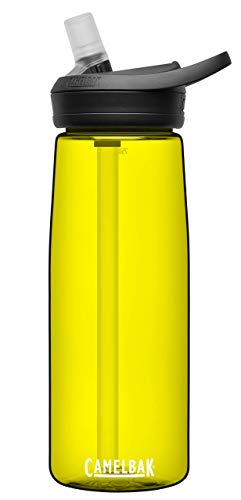
CamelBak Eddy+ 750ml
CamelBak
typically £18-22