Do Reusable Water Bottles Have Microplastics?
It is one of the most reasonable questions in the whole microplastics topic. You switched away from single-use plastic bottles to do the right thing — so does your reusable bottle have the same problem?
The honest answer: it depends on what the bottle is made of. A plastic reusable bottle can shed microplastics. A stainless steel or glass one essentially does not, apart from a small amount of wear at the plastic lid. The word “reusable” tells you nothing on its own — the material is everything.
Here is what the research shows, and what you can actually do about it.
The Short Answer, by Material
- Plastic-bodied bottles (polypropylene, Tritan, other “BPA-free” plastics): yes. The drinking vessel is a polymer, and polymers physically degrade into micro and nano-scale particles — with heat and surface abrasion the two mechanisms published research has actually measured.
- Stainless steel and glass bottles: mostly no. The body is an inert material with no polymers, so it won’t shed plastic particles. The only plastic contact is usually the lid and seal, which contributes a very small amount.
If you want the full head-to-head of every material — including lined aluminium and where Tritan really sits — we rank them all in water bottle materials ranked for microplastics. This article focuses on the practical question: given the bottle you have, or are about to buy, how much does it shed and what can you do?
Why Plastic Bottles Shed — the Evidence
Plastic does not stay intact forever. Under the ordinary stresses of daily use, polymer surfaces abrade, crack and fragment, releasing particles into whatever they contain.
The most dramatic figure comes from a 2020 study in Nature Food by researchers at Trinity College Dublin. They found that polypropylene infant feeding bottles released between 1.3 and 16.2 million microplastic particles per litre when filled with hot water and sterilised, with release rising steeply as the water got hotter. Baby bottles are a specific, heat-heavy case — but polypropylene is exactly the plastic used in many adult sports bottles and virtually all bottle caps, and the mechanism is the same one that operates every time you put a warm drink in a plastic bottle or leave it in a hot car.
Heat is not only a baby-bottle phenomenon. A 2023 study in Environmental Science & Technology tested ordinary plastic food containers and reusable pouches across realistic usage scenarios and found that microwave heating produced the highest particle release of any scenario tested — with refrigeration and prolonged room-temperature storage releasing particles too, just far fewer. The lesson transfers directly to bottles: warm contents and warm storage are what drive release from a plastic vessel.
The second measured mechanism is abrasion. A 2020 study in Scientific Reports found that opening plastic packaging — twisting a cap off among the actions tested — generates microplastics by wearing the plastic against itself.
What has not been measured is worth stating plainly. You will often read that reusable bottles shed through filling, squeezing, drinking and dishwasher washing. We could not find a published study that quantifies any of those specific actions for a drinking bottle. Heat and abrasion are evidenced; the rest is a reasonable inference from the same materials science, not a measured finding, and we are not going to dress it up as one.
It is worth keeping perspective on scale. Even a shedding reusable bottle is generally far better than single-use bottled water, which a 2024 PNAS study found contains roughly 240,000 nanoplastic particles per litre — with the plastic bottle itself the main source. We compare the two directly in bottled water vs tap water. The point of switching to a reusable bottle is sound; the point of choosing the right material is to finish the job.
Why Steel and Glass Largely Don’t
Stainless steel is an inert metal alloy and glass is chemically inert — neither contains any polymer, so the body of the bottle has nothing to degrade into plastic particles. This is not a marketing claim; it is basic materials chemistry, and it is why these are the two materials we recommend in the best microplastic-free water bottles UK guide.
The honest caveat is the lid. Almost every steel and glass bottle — including the Klean Kanteen Classic, the Hydro Flask Standard Mouth and the Lifefactory glass bottle — ships with a polypropylene cap and a silicone seal. That is where the small amount of plastic contact happens, and where the cap-abrasion finding above applies. But the plastic surface area of a cap is a tiny fraction of a fully plastic bottle, and silicone seals are generally considered inert. So “mostly no” is the accurate answer for steel and glass: near-zero from the body, a little from the lid.
How to Minimise Shedding
Whatever bottle you own, a few habits meaningfully reduce microplastic wear:
- Choose the material first. This is 90% of the decision. A stainless steel or glass body removes shedding from the drinking surface entirely — the single most effective step. If you are buying, start there.
- Keep heat away from plastic. Heat is the best-evidenced accelerant of shedding. Don’t fill a plastic bottle with hot drinks, don’t leave it in a hot car or sunny windowsill, and hand-wash rather than dishwashing plastic bottles where possible. That last one is an inference from the heat findings above rather than a directly measured result — no one has tested dishwasher cycles on a drinking bottle — but it is a cheap precaution.
- Go easy on the cap. Since cap threads abrade, avoid over-tightening, and don’t fidget-twist the lid. If you want to go further, a few bottles come with stainless steel lids.
- Don’t scour plastic surfaces. Abrasion is the second measured mechanism, so scouring a plastic bottle or lid with an abrasive pad works the surface exactly the way the cap-abrasion study describes. Use a soft bottle brush. (Squeezing a flexible bottle is usually listed alongside this; it has not actually been measured, so treat it as caution rather than evidence.)
- Replace worn plastic parts, not always the whole bottle. On a steel or glass bottle, the lid, gasket or straw are the parts that wear — replacing just those is cheap and often all you need.
Our broader guide to reducing microplastics at home puts these bottle habits in the context of the other easy wins around the house.
When to Worry — and When Not To
Worry (and act) if: your bottle is plastic and you regularly put warm drinks in it, leave it in heat, or run it through the dishwasher; or if any bottle’s plastic components are visibly scratched, cloudy, cracked, warped or smelly. A degraded plastic surface sheds more and also harbours bacteria. That is the moment to switch material or replace the part.
Don’t lose sleep if: you drink cold tap water from a stainless steel or glass bottle with a standard plastic lid. The body sheds nothing, the lid contributes a very small amount, and you are already well ahead of anyone drinking single-use bottled water. Perfect is not on the menu — almost every bottle has a plastic cap somewhere — but this is about as low as everyday exposure from a drinking vessel gets.
For where the health science actually stands on all of this, our overview of whether microplastics affect human health is the honest, hype-free version.
The Bottom Line
Do reusable water bottles have microplastics? If they are plastic, yes — and heat and wear make it worse. If they are stainless steel or glass, the body sheds nothing and only the lid contributes a little. So the answer is not really about “reusable” at all; it is about material. Choose steel or glass, keep heat away from any plastic parts, and replace worn lids, and you have taken the reusable-bottle question about as far as it can sensibly go.
To pick a specific bottle, see the best microplastic-free water bottles UK guide; to understand exactly why each material ranks where it does, read water bottle materials ranked for microplastics.
Frequently Asked Questions
Do reusable water bottles have microplastics?
It depends almost entirely on the material. A reusable bottle made of plastic — polypropylene, Tritan or other BPA-free polymers — is a polymer drinking vessel, and the two mechanisms research has actually measured are heat and abrasion. A 2023 study in Environmental Science & Technology found that heating plastic containers and reusable pouches released more particles than any other scenario tested, and a 2020 study in Scientific Reports found that opening plastic packaging generates microplastics through abrasion. A reusable bottle whose body is stainless steel or glass will not shed microplastics from the vessel itself, because those materials contain no polymers; the only plastic in play is usually the lid and seal. So a steel or glass bottle is largely microplastic-free at the drinking surface, while a plastic bottle is not.
Do stainless steel water bottles shed microplastics?
The steel body does not — it is an inert metal alloy with no polymer to degrade, so the drinking surface will not shed plastic particles. The one exception is the lid. Almost all steel bottles use a polypropylene cap and a silicone seal, and a 2020 study in Scientific Reports found that twisting plastic caps open and closed generates microplastic particles through abrasion. The amount is very small compared with a fully plastic bottle, because the cap is a tiny fraction of the surface area, but it is not literally zero. Choosing a bottle with a steel lid, or simply not over-tightening the cap, reduces it further.
How often should I replace a reusable water bottle?
A glass or stainless steel bottle can last many years — replace it when the body is dented enough to affect sealing, or when the lid, gasket or straw shows visible wear, cracking or a persistent smell. The plastic components (cap, seal, straw) are the parts that abrade, so replacing just the lid or gasket is often enough and cheaper than a new bottle. A plastic-bodied bottle should be retired sooner: once it is scratched, cloudy, warped from heat or the plastic feels rough, it is shedding more, and a scratched surface also harbours bacteria.
Sources
- Microplastic release from the degradation of polypropylene feeding bottles during infant formula preparation — Li et al., Nature Food, 2020
- Assessing the Release of Microplastics and Nanoplastics from Plastic Containers and Reusable Food Pouches: Implications for Human Health — Hussain et al., Environmental Science & Technology, 2023
- Microplastics generated when opening plastic packaging — Sobhani et al., Scientific Reports, 2020
- Rapid single-particle chemical imaging of nanoplastics by SRS microscopy — Qian et al., PNAS, 2024
This article is based on published research and manufacturer specifications. It does not constitute health advice, and it does not report any hands-on or laboratory testing by us.
Recommended Products

Klean Kanteen Classic 800ml
Klean Kanteen
typically £20-30

Hydro Flask Standard Mouth 621ml
Hydro Flask
typically £30-40

Lifefactory Glass Water Bottle 650ml
Lifefactory
typically £33-45
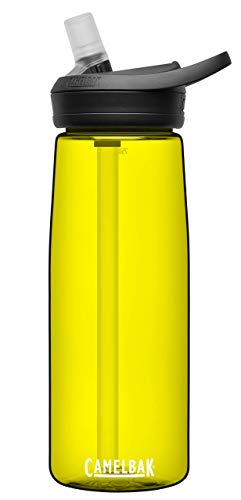
CamelBak Eddy+ 750ml
CamelBak
typically £18-22