Microplastics and Cooking: How Kitchen Practices Affect Food
Your kitchen is a microplastic exposure zone — and cooking temperature is the key variable that most guides overlook. Every material in contact with your food has a temperature threshold above which it starts releasing particles. Understanding those thresholds lets you make informed choices about what you cook with and how.
This guide covers the microplastics cooking utensils, pans, and containers can release, the temperatures at which problems begin, and practical alternatives for every item. For a broader overview of microplastic-free kitchen products, see our kitchenware and food containers guide.
Non-Stick Pans: The PTFE Temperature Problem
Non-stick pans coated with polytetrafluoroethylene (PTFE, commonly known as Teflon) are in an estimated 70% of UK kitchens. When the coating is intact and used within its design limits, PTFE is chemically stable. The problems start when it degrades.
How PTFE Releases Particles
A study published in Science of the Total Environment (2022) estimated that thousands to millions of Teflon micro and nanoplastics could be released from the scratched surface of a non-stick cooking pot during a simulated cooking process. That is a wide range rather than a precise dose — but the direction is clear, and the coating does not need to be visibly flaking for it to apply. Microscopic damage is sufficient.
PTFE degradation accelerates under these conditions:
- Overheating above 260°C — PTFE begins to decompose and release toxic fumes (polymer fume fever) and micro/nanoparticles. An empty pan on a high hob can reach 260°C in under 3 minutes.
- Metal utensil contact — Metal spatulas, forks, and tongs scratch the coating, creating micro-abrasions that shed particles during subsequent cooking.
- Dishwasher use — The harsh detergent and high water temperatures in dishwashers accelerate coating breakdown. Most non-stick pan manufacturers recommend hand washing.
- Age and wear — Even with careful use, PTFE coatings degrade over time. Industry estimates suggest a typical non-stick pan lasts 3-5 years before the coating becomes compromised.
The Temperature Threshold
Critical temperature: 260°C and above. Below this, intact PTFE is relatively stable. Above it, the coating breaks down and releases both particles and toxic fumes. For context, searing a steak typically reaches 230-290°C at the pan surface, and stir-frying often exceeds 260°C.
If you continue using non-stick pans, the practical rules are: never preheat empty, never use metal utensils, and replace at the first sign of coating damage. Or consider the alternatives below.
The Tefal Non-Stick Frying Pan on our site is rated with explicit microplastic risk notes — it performs well when new, but the PTFE coating will degrade with use.
Plastic Utensils at High Heat: Nylon, Polypropylene, and Melamine
Plastic cooking utensils are the items most people never think to question. Yet when a nylon spatula sits in a hot pan or stirs a simmering sauce, it is being exposed to temperatures that can cause material degradation and particle release.
Nylon Utensils
Nylon (polyamide) is the most common plastic used in cooking spatulas, slotted spoons, and tongs. Research on nylon cookware safety is limited compared to PTFE, but the material properties are well understood:
- Melting point: approximately 220-260°C depending on the nylon grade
- Glass transition temperature: approximately 70-80°C (the point where the material begins to soften and becomes more susceptible to surface wear)
- Practical concern: A nylon spatula resting against the edge of a hot frying pan, or left in a pot of boiling liquid, is sitting far above its glass transition temperature, where the surface softens and becomes more prone to wear.
Be straight about the evidence here: we have not found a published measurement of how many particles a nylon utensil actually sheds in use. The concern rests on the material’s thermal properties, not on a quantified finding, and we would rather say so than quote a number we cannot stand behind.
Practical rule: do not leave nylon utensils sitting in hot pans or pots. Brief stirring is a smaller concern than prolonged contact — and wood or stainless steel removes the question entirely.
Polypropylene Utensils
Polypropylene (PP) utensils — often marketed as “heat resistant” — have a lower thermal stability than nylon:
- Melting point: approximately 130-170°C
- Softening temperature: approximately 100°C
- Practical concern: Polypropylene utensils should not be used for high-heat cooking — above its softening point the material deforms, and deformed plastic in contact with food is not what you want. The best-quantified evidence on polypropylene in food contact comes from containers rather than utensils: a study of microplastic release from plastic containers and food pouches found that microwave heating produced the highest release of any usage scenario tested, up to 4.22 million microplastic and 2.11 billion nanoplastic particles from one square centimetre of surface in three minutes.
Practical rule: keep polypropylene away from heat. Do not use polypropylene utensils for frying, searing, or extended stirring in boiling liquids — and do not microwave food in polypropylene containers.
Melamine Utensils
Melamine resin utensils (often colourful, marketed for children) should never be used for hot food. The German Federal Institute for Risk Assessment (BfR) assessed melamine-formaldehyde resin tableware and concluded that it should not be used for hot drinks and meals: the resin degrades in contact with hot liquids and releases melamine and formaldehyde. “Bamboo ware” was the worst offender, in some cases exceeding the safe daily formaldehyde intake for toddlers by up to 120 times. Cold and lukewarm use was not found to be a concern.
This is chemical migration rather than microplastic particle release — a different mechanism — but it points the same way: plastic materials and heat are a risky combination.
Silicone: Is It Safe?
This is one of the most searched questions in the microplastics space — and the answer requires nuance.
What Silicone Is
Silicone (polydimethylsiloxane, or PDMS) is technically a synthetic polymer, but it is chemically distinct from petroleum-based plastics. It is made from silicon (a naturally abundant element), oxygen, carbon, and hydrogen. Its molecular structure gives it high thermal stability — significantly higher than nylon or polypropylene.
The Safety Evidence
- Thermal stability: Food-grade silicone is rated for continuous use up to approximately 230°C, with many products rated to 260°C. At these temperatures, silicone does not shed particles the way degraded PTFE or overheated plastic utensils do.
- Chemical inertness: Silicone does not react with food, acids, or fats under normal cooking conditions.
- Regulatory status: Silicone is approved for food contact by both the US FDA and the European Food Safety Authority (EFSA). It meets EU Regulation 1935/2004 on materials intended to come into contact with food.
- Limitations: Very cheap or uncertified silicone products may contain fillers (including plastic fillers) that reduce cost but compromise safety. Always look for food-grade certification from reputable brands.
Our Assessment
Silicone cooking utensils are a practical, low-risk alternative to nylon and polypropylene for most cooking tasks. They are not entirely zero-risk — no synthetic material is — but the evidence supports their safety at normal cooking temperatures. The Zeal Classic Silicone Spatula Spoon on our site is a good example of a food-grade, UK-available option.
Temperature threshold: up to 230°C for routine use. Silicone is safe for stirring, scraping, and baking at standard oven temperatures. Avoid direct contact with open flames or temperatures exceeding the manufacturer’s rated limit.
Plastic Chopping Boards During Cooking Prep
Chopping boards may not seem like a “cooking” issue, but food preparation is part of the cooking process, and plastic boards contribute microplastics directly to the food you are about to cook.
A 2023 study published in Environmental Science & Technology estimated a per-person annual exposure of 7.4 to 50.7 grams of microplastics from a polyethylene chopping board, and 49.5 grams a year from a polypropylene one. Both are modelled annual figures resting on the authors’ stated assumptions, not a measured dose per use. Chopping carrots released more than chopping without them, and polypropylene shed more than polyethylene.
The standard polypropylene and high-density polyethylene (HDPE) boards used in most UK kitchens are the primary concern.
The swap: Wood, bamboo, or fibre-composite boards. Wood has natural antimicrobial properties and does not shed plastic particles. Our guide to the best microplastic-free chopping boards compares hardwood, bamboo, and dishwasher-safe composite options for UK kitchens, and the broader kitchenware guide covers containers and cookware.
Microwave Heating in Plastic Containers
Microwaving food in plastic containers is one of the highest-concentration microplastic exposure pathways identified in recent research.
A 2023 study in Environmental Science & Technology found that microwave heating caused the highest microplastic release of any usage scenario the researchers tested — up to 4.22 million microplastic and 2.11 billion nanoplastic particles from a single square centimetre of container surface in three minutes. The “microwave safe” label on plastic containers refers to the container not warping, cracking, or melting — it does not mean the container will not release microplastics.
The study also found that:
- Food pouches shed more than rigid containers — the polyethylene pouch released more than the polypropylene containers, which is worth knowing if you reheat baby food in its pouch
- Cold and ambient storage are not exempt — refrigeration and long room-temperature storage also released millions to billions of particles, though far fewer than microwaving
- Acidity was tested, not assumed — the researchers ran an acidic food simulant alongside plain water rather than water only
The swap: Transfer food to glass or ceramic containers before microwaving. The Pyrex storage range goes directly from fridge to microwave to table.
Temperature Guide: When Materials Release Particles
This consolidated table shows the temperature thresholds at which common kitchen materials begin releasing microplastic particles or undergo degradation that leads to particle release:
| Material | Common Uses | Critical Temperature | Risk Level | Notes |
|---|---|---|---|---|
| Polypropylene (PP) | Utensils, containers, boards | ~100°C (softening point) | High | Softens around boiling point; heaviest measured release is under microwaving |
| Melamine resin | Children’s plates, utensils | Any hot food or drink | High | Chemical migration (melamine + formaldehyde), not particle release |
| Nylon (polyamide) | Spatulas, slotted spoons, tongs | ~70-80°C (softening point) | Medium (precautionary) | Softens well below cooking temperatures; particle release in use not quantified |
| Polypropylene containers | Food storage, microwave use | Microwave heating | High | Up to 4.22M microplastic + 2.11bn nanoplastic particles/cm² in 3 min |
| PTFE (Teflon) — intact | Non-stick pans | ~260°C | Medium | Stable below threshold if coating undamaged |
| PTFE — damaged | Non-stick pans (scratched/worn) | Any temp | High | Thousands to millions of particles estimated from a scratched surface |
| Silicone (food-grade) | Spatulas, baking moulds, oven gloves | ~230-260°C | Low | Thermally stable at normal cooking temperatures |
| Cast iron | Pans, casseroles, skillets | N/A | None | No synthetic coating, no microplastic risk |
| Stainless steel | Pans, utensils, bowls | N/A | None | No synthetic materials in food contact surfaces |
| Wood | Utensils, chopping boards | N/A | None | Natural material, no microplastic particles |
| Glass / ceramic | Baking dishes, storage | N/A | None | Inert materials, no microplastic risk |
| Borosilicate glass | Pyrex, measuring jugs | N/A | None | Thermal shock resistant, no microplastic risk |
Key insight: The lowest-concern cooking materials are those with no critical temperature threshold — because they contain no synthetic polymers to release. Cast iron, stainless steel, wood, and glass have no plastic to shed at any temperature.
Safe Alternatives: What to Cook With Instead
The good news is that every plastic cooking item has a durable, effective, microplastic-free alternative:
Pans and Cookware
- Le Creuset Cast Iron Casserole — Enamelled cast iron with a glass-based interior coating. No PTFE, no synthetic polymers. A lifetime purchase that improves with age.
- Lodge Cast Iron Skillet 10” — Pre-seasoned with vegetable oil (not a synthetic coating). The classic alternative to non-stick. With proper care, it develops a natural non-stick surface. A small fraction of the Le Creuset’s price.
- GreenPan Cambridge Frying Pan — Uses a ceramic-based (Thermolon) non-stick coating instead of PTFE. While ceramic coatings do wear over time, they do not release PTFE particles. A middle-ground option for those who want non-stick performance.
- Stainless steel pans — Professional kitchens use stainless steel almost exclusively. With proper preheating and oil, stainless steel provides excellent cooking performance with no plastic cooking surface.
Utensils
- OXO Good Grips Wooden Turner — Beechwood construction with no synthetic coatings. Heat resistant far beyond any cooking temperature. Safe for use with all cookware including non-stick (if you still use it). Browse our kitchenware category for more options.
- Zeal Classic Silicone Spatula Spoon — Food-grade silicone rated to 230°C. A practical alternative to nylon spatulas for most cooking tasks.
- Stainless steel utensils — Tongs, ladles, and spoons in stainless steel are the professional kitchen standard. Avoid using on non-stick cookware (they will scratch PTFE coatings).
Food Storage and Reheating
- Glass containers with glass or steel lids — Pyrex, Kilner, and similar glass storage containers eliminate microplastic exposure from food contact. Glass goes directly into the microwave.
- Ceramic baking dishes — For oven reheating and cooking. Completely inert at any cooking temperature.
- Stainless steel containers — Ideal for packed lunches and on-the-go food storage. Not suitable for microwaves.
Practical Kitchen Audit: Three Steps
If you want to reduce microplastic exposure from cooking but cannot replace everything at once, prioritise in this order:
-
Stop microwaving in plastic immediately — this is the single highest-concentration exposure pathway. Transfer food to glass or ceramic before microwaving. Cost: a basic Pyrex jug, or a ceramic bowl you already own — the cheapest change on this list.
-
Replace plastic utensils that contact hot food — swap nylon and polypropylene spatulas, spoons, and tongs for wood or silicone. Cost: modest per utensil — cheaper than replacing the pan they are scratching.
-
Assess your non-stick pans — if the coating is scratched, flaking, or discoloured, replace with cast iron or stainless steel. If the coating is intact, use carefully (no metal utensils, no overheating, hand wash only) while you save for alternatives.
This sequence prioritises by how well the exposure is actually measured. Microwaving in plastic has the highest measured release of any scenario researchers have tested. A scratched non-stick coating is estimated to shed thousands to millions of particles during cooking. Plastic utensils come last because the concern there rests on the material’s properties rather than on a measured dose.
The Bottom Line
Temperature is the variable that turns kitchen materials from inert surfaces into microplastic sources. The lower the temperature a material tolerates, the more urgently it should be replaced. Polypropylene softens around 100°C, and melamine tableware starts releasing melamine and formaldehyde as soon as it meets hot food or drink — both conditions met during everyday cooking. PTFE at 260°C is safer when intact but becomes the highest-risk material in your kitchen once the coating is damaged.
The lowest-concern approach is simple: cook with materials that have no temperature threshold because they contain no synthetic polymers. Cast iron, stainless steel, wood, glass, and ceramic have been used safely for cooking for centuries. They are not “alternatives” — they are the original cookware, and they remain the best.
Sources
- Raman imaging for the identification of Teflon microplastics and nanoplastics released from non-stick cookware — Science of the Total Environment, 2022
- Cutting Boards: An Overlooked Source of Microplastics in Human Food? — Environmental Science & Technology, 2023
- Assessing the Release of Microplastics and Nanoplastics from Plastic Containers and Reusable Food Pouches: Implications for Human Health — Environmental Science & Technology, 2023
- Food contact materials — European Food Safety Authority
- Do not use “bamboo ware” tableware for hot drinks and meals — German Federal Institute for Risk Assessment (BfR), 2019
Product assessments are based on available material data at the time of review. Always verify current product specifications and manufacturer temperature ratings before use.
Recommended Products

Le Creuset Signature Cast Iron Round Casserole
Le Creuset
typically £250-320

Lodge Cast Iron Skillet 10.25 inch
Lodge
typically £25-40

Zeal Classic Silicone Spatula Spoon
Zeal
typically £6-10
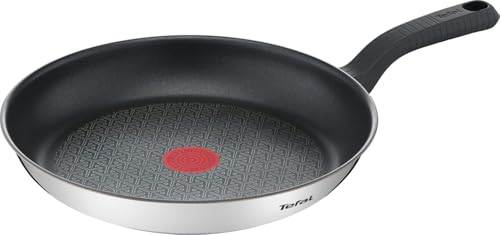
Tefal Comfort Max Frying Pan 26cm
Tefal
typically £30-35