Microplastic-Free Kitchenware & Food Containers UK 2026
Your kitchen is where food meets the materials it’s stored in, prepared on, and cooked with — and those materials matter. Research published in Environmental Science & Technology modelled a per-person annual exposure of 7.4 to 50.7 grams of microplastics from a polyethylene chopping board, and 49.5 grams a year from a polypropylene one — estimates built on assumptions the authors set out, rather than a measured per-use dose. A separate study imaged the scratched surface of a non-stick pan and estimated that anywhere from thousands to millions of Teflon microplastic and nanoplastic particles could come off during a single simulated cooking process.
These aren’t hypothetical exposures — they’re particles going directly into the food your family eats. Here’s how to assess your kitchen and make practical swaps.
The Three Biggest Sources in Your Kitchen
1. Plastic Chopping Boards
Every time a knife scores a plastic chopping board, it shears off microscopic fragments. A 2023 study by researchers at North Dakota State University quantified this: the authors estimated a person could be exposed to 14.5 to 71.9 million polyethylene particles a year from a chopping board, against 79.4 million for polypropylene. Chopping carrots released more than chopping without them.
The standard polypropylene and polyethylene boards used in most UK kitchens are the primary concern. Colour-coded commercial catering boards — common in home kitchens after food safety awareness campaigns — are typically made from high-density polyethylene (HDPE).
The swap: Wood, bamboo, or fibre-composite boards. Wood has natural antimicrobial properties and doesn’t shed plastic. The Epicurean PREP Board is made from a wood fibre composite that’s durable and knife-friendly.
2. Non-Stick Cookware (PTFE Coatings)
Non-stick pans coated with polytetrafluoroethylene (PTFE, branded as Teflon) have been shown to release micro and nanoparticles when the coating is damaged. A study published in Science of the Total Environment (2022) used Raman imaging on a scratched non-stick surface and estimated that thousands to millions of Teflon microplastics and nanoplastics might be released during a mimic cooking process.
That is a wide range, and deliberately so: what comes off depends on how badly the coating has been damaged. Which is the practical point — the condition of your pan matters far more than its brand or price.
The risk increases with:
- Metal utensils scratching the surface
- Overheating above 260°C (which also releases toxic fumes)
- Aging and wear — older pans with visible coating degradation release significantly more particles
- Dishwasher use, which accelerates coating breakdown
The swap: Cast iron, stainless steel, or ceramic-coated cookware. Le Creuset Cast Iron and Lodge Cast Iron Skillet are lifetime purchases that improve with use.
3. Plastic Food Storage Containers
Plastic containers — including those labelled “microwave safe” and “BPA-free” — release microplastics when heated. A University of Nebraska study (2023) found that microwaving food in polypropylene containers released 4.22 million microplastic particles per square centimetre over three minutes.
Even without heating, plastic containers release particles through:
- Mechanical stress (opening, closing, stacking)
- Contact with acidic or fatty foods
- Repeated washing in dishwashers
- Age and wear
The swap: Glass containers with snap-lock lids. The Pyrex Cook & Store Set is a UK kitchen staple — borosilicate glass that goes from fridge to oven to table.
Our Recommended Kitchenware
Based on available material data, these kitchen products are among the lowest-concern options we’ve assessed:
Food Storage
- Pyrex Cook & Store Set — Borosilicate glass containers with plastic lids. The food contacts only glass. Oven, microwave, and dishwasher safe.
- Kilner Clip Top Jar 1L — Soda-lime glass with a stainless steel clip and rubber seal. No plastic in contact with food contents. Ideal for dry goods, pickles, and batch cooking. Buy Kilner Clip Top Jar on Amazon UK
Buy Pyrex Storage Set on Amazon UK
Chopping Boards
- Epicurean PREP Board Natural — Wood fibre composite (Richlite). NSF-certified food safe. Knife-friendly surface that resists scoring. Buy Epicurean PREP Board on Amazon UK
Cookware
- Le Creuset Cast Iron Casserole — Enamelled cast iron. The interior enamel is a glass-based coating, not plastic. Lifetime warranty. A serious investment, but it lasts generations. Buy Le Creuset Cast Iron Casserole on Amazon UK
- Lodge Cast Iron Skillet 10” — Pre-seasoned cast iron with no synthetic coatings. The seasoning is vegetable oil polymerised through heat. A small fraction of the Le Creuset’s price. Buy Lodge Cast Iron Skillet on Amazon UK
Baking
- Katbite Unbleached Baking Parchment (30cm x 80m roll) — Unbleached, silicone-coated greaseproof paper on a long roll. Same reasoning as below: the paper is the food-contact surface and the silicone coating is inert, so there is no synthetic polymer film between your food and the tray. Buy Katbite Unbleached Parchment on Amazon UK
- If You Care Baking Parchment — Unbleached, silicone-coated greaseproof paper. The silicone coating is inert and doesn’t contain synthetic polymer additives. FSC-certified wood pulp, and the better choice on packaging if you can get it — but it is currently out of stock on Amazon UK, which is why it is no longer our first suggestion here. Check If You Care Baking Parchment availability
- Avoid the alternative you might reach for instead: non-stick baking liners sold as reusable “PTFE sheets” are a fluoropolymer film in direct contact with hot food. Parchment is the microplastic-free option; a reusable PTFE sheet is not.
Products to Approach With Caution
- Joseph Joseph Nest Boards — Made from polypropylene. While space-efficient and colourful, they carry the same microplastic shedding risk as any plastic chopping board. We recommend switching to wood or composite alternatives.
- Tefal Non-Stick Frying Pan — PTFE-coated surface. When new and undamaged, the coating is stable. But all non-stick coatings degrade over time, and the microplastic release from worn coatings is well-documented.
Kitchen Habits That Reduce Exposure
Material swaps are the most effective change, but these habits also help:
- Never microwave food in plastic — even “microwave safe” containers. Transfer to glass or ceramic first.
- Use wooden or silicone utensils on any remaining non-stick cookware — metal utensils accelerate coating damage.
- Replace worn non-stick pans promptly — if you can see scratches, the pan is shedding particles. Don’t wait until the coating is visibly flaking.
- Hand wash plastic items when you must use them — dishwashers accelerate degradation.
- Don’t store food in plastic long-term — especially acidic foods (tomato sauce, citrus, vinegar-based dressings) or fatty foods, which accelerate leaching.
- Avoid cutting hard foods on plastic boards — if transitioning gradually, use wooden boards for hard vegetables and keep plastic boards for softer items only.
The Cost Question
A common objection: isn’t glass and cast iron more expensive? Initially, yes. But the economics shift over a product’s lifetime:
- A Pyrex glass container set lasts decades. Plastic containers typically need replacing every 2-3 years.
- A cast iron pan lasts a lifetime — literally. It improves with use. A non-stick pan lasts 3-5 years before the coating degrades.
- Wooden chopping boards, properly maintained with occasional oiling, outlast plastic boards significantly.
The upfront cost is higher; the per-year cost is lower. And you get the added benefit of keeping microplastics out of your food.
Sources
- Cutting Boards: An Overlooked Source of Microplastics in Human Food? — Environmental Science & Technology, 2023
- Raman imaging for the identification of Teflon microplastics and nanoplastics released from non-stick cookware — Science of the Total Environment, 2022
- Assessing the Release of Microplastics and Nanoplastics from Plastic Containers and Reusable Food Pouches: Implications for Human Health — Environmental Science & Technology, 2023
Product assessments are based on available material and ingredient data at the time of review. Formulations and materials may change — always verify current product specifications.
Recommended Products

Pyrex Cook & Store Glass Storage Set (3 Piece)
Pyrex
typically £22-26
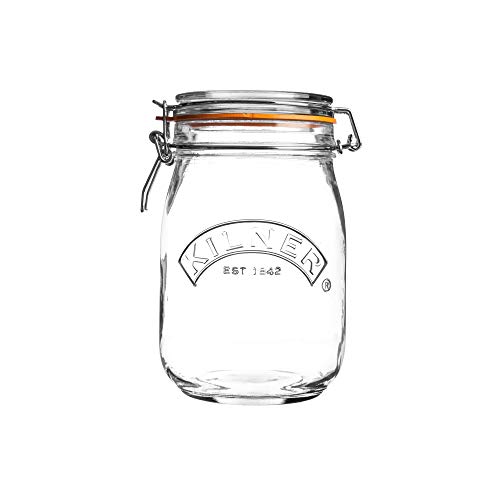
Kilner Clip Top Glass Jar 1L
Kilner
typically £4-5

Epicurean PREP Board Natural
Epicurean
typically £25-30

Le Creuset Signature Cast Iron Round Casserole
Le Creuset
typically £250-320

Lodge Cast Iron Skillet 10.25 inch
Lodge
typically £25-40

If You Care Unbleached Baking Parchment
If You Care
typically £3-5