Microplastics in Cosmetics and Makeup: UK Ingredient Guide
The UK banned plastic microbeads in rinse-off cosmetics in 2018, and many consumers assumed the microplastics problem in personal care was solved. But microbeads were just one form of microplastic — and the ban only covered products you rinse off. Your foundation, mascara, primer, and lipstick were never included.
According to the Plastic Soup Foundation, the organisation behind the Beat the Microbead campaign, more than 500 different synthetic polymer ingredients are currently used across the global cosmetics industry. The 2018 ban reached exactly one of them, in one format: solid plastic microbeads. The liquid, gel and film-forming polymers that make up most modern formulations were never in scope at all.
This guide covers the microplastics in cosmetics UK consumers apply every day: how to identify them on an ingredient list, the current regulatory landscape, and UK-available alternatives.
Why Cosmetic Microplastics Matter
It is worth being precise about why, because one common argument for avoiding them does not hold up. There is no good evidence that microplastic particles cross intact skin, and we are not going to claim otherwise. The case rests on two other things.
Lip products get eaten. Anything applied to the lips is swallowed in small amounts over the course of a day. That makes lipstick, balm and gloss an ingestion route rather than a skin one — the same route as food and water, just applied by hand.
Everything else goes down the drain. Cleanser, shower gel, shampoo, makeup remover and the residue of every leave-on product you eventually wash off all end up in wastewater. A study by researchers at the University of Manchester published in Nature Geoscience found widespread microplastic contamination — including microbeads — in riverbeds across urban, suburban and rural catchments in north-west England, with the most contaminated site holding around 517,000 particles per square metre.
The INCI Checklist: Microplastic Ingredients to Look For
Every cosmetic product sold in the UK is required to display an INCI (International Nomenclature of Cosmetic Ingredients) list. These are the synthetic polymer ingredients most commonly found in UK-sold cosmetics. If you see any of these on a product label, it contains microplastics.
Definitely Microplastics
Polyethylene (PE) — The most widely recognised microplastic ingredient. Used as a bulking agent, abrasive (in scrubs), and emulsion stabiliser. Still permitted in leave-on UK cosmetics despite being banned in rinse-off products. Found in some exfoliating face washes, body scrubs, and lip products.
Polypropylene (PP) — Used as a bulking agent and viscosity controller. The same plastic used in food containers and baby bottles. Common in lipsticks and foundations.
Polymethyl methacrylate (PMMA) — Used as a bulking agent to create a “soft focus” blurring effect on skin. Found extensively in primers and “pore-minimising” products. Listed on INCI labels exactly as “Polymethyl Methacrylate” or sometimes abbreviated.
Nylon-12 / Nylon-6 — Used to create a smooth, silky feel on the skin. Common in pressed and loose powder foundations, primers, and blushers. Look for “Nylon-12” or “Nylon-6” on the ingredients list.
Polyethylene terephthalate (PET) — Used as a film-forming agent and binder. The same plastic used in drinks bottles. Found in some nail polishes, glitter cosmetics, and hair products.
Acrylates copolymer / Acrylates crosspolymer — Used as film-forming agents that create “long-lasting” or “waterproof” effects. Extremely common in sunscreens, foundations, mascaras, and hair products. These are among the most difficult to avoid because they appear in so many formulations.
Polyurethane — Used as a film former and binder. Common in nail polishes, hair sprays, and some foundations. Look for “Polyurethane” or “Polyurethane-1” on ingredient lists.
Debated Ingredients
Silicones (Dimethicone, Cyclomethicone, Cyclopentasiloxane) — Technically synthetic polymers, but their classification as microplastics is disputed. Some silicones biodegrade under certain conditions; others persist in the environment. The ECHA restriction includes some silicone types but exempts others based on biodegradability criteria. We take a cautious approach and recommend avoiding them where practical alternatives exist.
Carbomer — A crosslinked polyacrylic acid used as a thickener in gels and creams. Classified as a microplastic by some organisations but considered relatively low risk by others due to its water-soluble molecular structure.
Product Types Most Likely to Contain Microplastics
Not all cosmetics carry equal risk. Based on ingredient analysis, these product categories are the most likely to contain synthetic polymer ingredients:
High Risk
- Glitter makeup — Most conventional cosmetic glitter is made from PET plastic film coated with aluminium and coloured with dyes. Each application deposits thousands of microplastic particles. The EU banned loose cosmetic glitter under the ECHA 2023 restriction, but this does not apply in the UK.
- Liquid foundation — Film-forming acrylates are common in long-wear foundations to create the “stays all day” effect.
- Waterproof mascara — Acrylates copolymers and crosspolymers are the primary ingredients that make mascara waterproof.
- Pore-minimising primers — PMMA is the standard ingredient used to create the soft-focus blurring effect that “fills” pores.
Medium Risk
- Lipstick and lip gloss — May contain PE, PP, or film-forming polymers. Lip products carry an additional ingestion risk.
- Sunscreen — Many sunscreens use acrylates crosspolymer as a water-resistant film former.
- Pressed powder — Nylon-12 is commonly used to improve the texture and application of powder products.
- Nail polish — Contains multiple synthetic polymers including nitrocellulose, tosylamide, and often polyurethane.
Lower Risk
- Simple moisturisers — Basic formulations may only contain carbomer (debated) as a thickener.
- Cleansing oils and balms — Oil-based formulations tend to use fewer synthetic polymers.
- Bar soaps — Solid soap formulations rarely contain synthetic polymers.
The ECHA 2023 Restriction: What Changed — and What the UK Missed
In September 2023, the European Commission adopted ECHA’s restriction on intentionally added microplastics, the most comprehensive microplastic regulation in the world. For cosmetics specifically, the EU restriction introduces:
- Immediate (October 2023): Ban on loose cosmetic glitter and microbeads in rinse-off products
- By October 2027: Most cosmetic products containing synthetic polymer microparticles must be reformulated or withdrawn from the EU market
- Estimated impact: Reduction of approximately 500,000 tonnes of intentional microplastic releases over 20 years across all product categories
What This Means for UK Consumers Post-Brexit
Since Brexit, the UK is not bound by the ECHA restriction. The UK has not announced equivalent legislation. As our regulation article explains in detail, DEFRA has taken a cautious, evidence-gathering approach with no formal regulatory proposal published as of early 2026.
The practical implications are significant:
Products reformulated for the EU may still be sold in original formulations in the UK. While multinational brands like Unilever and L’Oreal are largely reformulating globally (it is more cost-effective than maintaining separate formulations), smaller brands and own-label products may continue using microplastic ingredients in UK-only products.
Cosmetic glitter remains legal in the UK. While the EU banned loose cosmetic glitter from October 2023, there is no equivalent UK ban. UK consumers can still purchase products containing PET glitter that are no longer legal for sale in the EU.
UK consumers cannot rely on regulation — they must rely on ingredient knowledge. Until the UK implements equivalent measures, the INCI checklist above is your primary tool for identifying microplastics in cosmetics.
For a comprehensive overview of where UK regulation stands relative to the EU, see our full regulation analysis.
How to Check Your Existing Products: A Step-by-Step Guide
You do not need to discard your existing cosmetics immediately. Use this process to assess what you currently own and make informed replacement decisions as products run out.
Step 1: Gather Your Products
Collect the cosmetics you use most frequently — daily moisturiser, foundation, primer, mascara, lipstick. These represent your highest exposure.
Step 2: Find the INCI List
The INCI list is usually printed on the outer packaging or on the product itself in small text. It starts with the highest-concentration ingredients and works down. If the packaging has been discarded, check the brand’s website — many now publish full ingredient lists online.
Step 3: Scan for Key Terms
Look for these terms in the ingredients list:
- Polyethylene or PE
- Polypropylene or PP
- Polymethyl methacrylate or PMMA
- Nylon-12 or Nylon-6
- Polyethylene terephthalate or PET
- Acrylates copolymer or Acrylates crosspolymer
- Polyurethane
- Any ingredient starting with Poly- deserves closer inspection
Step 4: Use a Checking Tool
The Beat the Microbead app (available on iOS and Android) was developed by the Plastic Soup Foundation and allows you to scan product barcodes. It checks ingredients against a database of known microplastic polymers and rates products with a traffic light system: green (microplastic-free), orange (contains debated ingredients), or red (contains microplastics).
Yuka is another popular scanning app available in the UK. While its primary focus is health and nutrition ratings rather than microplastics specifically, it does flag synthetic polymer ingredients and provides ingredient-by-ingredient analysis.
Step 5: Replace Gradually
Switch products as they run out rather than discarding half-used items. Start with the products you use most frequently, and with lip products — those are the ones you end up swallowing.
Certifications That Do Most of the Checking For You
If reading INCI lists feels overwhelming, these certifications narrow the field considerably. One caveat first: none of them is a microplastics standard as such. They restrict synthetic and petrochemical-derived ingredients as a category, which rules out most microplastic ingredients as a side effect — but the ingredient list is still the only thing that tells you for certain.
NATRUE — One of the strictest natural cosmetics certifications globally. Prohibits all synthetic polymers. Products carrying the NATRUE seal are reliably microplastic-free.
COSMOS Organic / COSMOS Natural — The global standard for organic cosmetics, certified in the UK against the Soil Association’s health and beauty standards. It limits controversial synthetic chemicals and petrochemical-derived ingredients and requires a minimum proportion of certified organic content.
Soil Association Organic — The UK’s most recognised organic cosmetics certification. All certified products are free from synthetic polymer ingredients.
Note that “vegan,” “cruelty-free,” and “clean beauty” labels do not guarantee a product is microplastic-free. Many synthetic polymers are both vegan and not tested on animals.
UK-Available Alternatives
We found no synthetic polymer ingredients in these products, and they are available from UK retailers. For our full range of 13 personal care product reviews, see our microplastic-free personal care guide.
Weleda Skin Food — NATRUE-certified moisturiser formulated with plant oils, beeswax, and lanolin. No synthetic polymers, no silicones. Stocked by Boots, Holland & Barrett and Weleda’s own site as well as Amazon, so it is worth comparing retailers.
Faith in Nature Lavender Shampoo — Plant-based surfactants with natural fragrance. Refill stations available in Holland & Barrett.
Dr. Bronner’s Castile Soap — Organic oils (coconut, olive, hemp) in a versatile formula that works as body wash, hand soap, or cleanser.
Ben & Anna Natural Deodorant — Baking soda-based formula in a cardboard tube. No synthetic fragrance, no aluminium, no synthetic polymers.
Browse our complete personal care product directory for all verified alternatives.
The Bigger Picture: Why Cosmetic Microplastics Matter
The scale of synthetic polymer use in cosmetics is substantial: more than 500 ingredients in circulation, across the product categories most people use every day. The EU thought it substantial enough to regulate at source — ECHA’s restriction was adopted on the basis that intentionally added microplastics in consumer products, cosmetics among them, are worth cutting off before they are sold, with an expected reduction of roughly 500,000 tonnes over 20 years.
When cosmetics are washed off — in the shower, at the sink, or removed with cleansing wipes — the synthetic polymers enter wastewater, and treatment works are not designed to filter particles at the micro and nano scale. A 2016 study of a large UK treatment works published in Environmental Science & Technology measured a 98% removal rate and still calculated that the plant was releasing around 65 million microplastic particles into the receiving water every day. Cosmetic microbeads were among the particles found, concentrated in the grease removal stage.
Laundry products send closely related ingredient families down the same drain — the fragrance microcapsules in fabric conditioner use the same encapsulation approach as long-wear cosmetics. Our guide to microplastic-free laundry products covers those swaps.
Choosing microplastic-free cosmetics is both a personal health decision and an environmental one. Every product switch reduces the volume of synthetic polymers entering UK waterways.
Sources
- Beat the Microbead: Product database and ingredient guide — Plastic Soup Foundation
- ECHA restriction on intentionally added microplastics — European Chemicals Agency
- Microplastic contamination of river beds significantly reduced by catchment-wide flooding — Hurley et al., Nature Geoscience, 2018
- Wastewater Treatment Works (WwTW) as a Source of Microplastics in the Aquatic Environment — Murphy et al., Environmental Science & Technology, 2016
- NATRUE certification standard — NATRUE International Natural and Organic Cosmetics Association
- Health and beauty standards — Soil Association Certification
Product assessments are based on available INCI data at the time of review. Formulations change — always check the current ingredient list on the product packaging. This article is for informational purposes only and does not constitute medical advice.
Recommended Products

Weleda Skin Food Original
Weleda
typically £12-17

Faith in Nature Lavender & Geranium Shampoo
Faith in Nature
typically £4-7

Dr. Bronner's Pure-Castile Liquid Soap
Dr. Bronner's
typically £15-20

Ben & Anna Natural Deodorant Stick
Ben & Anna
typically £6-10
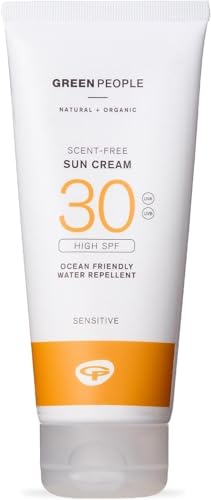
Green People Scent Free Sun Lotion SPF30
Green People
typically £15-25